


Are there different models of wind - powered fire extinguishers?
Nov 19, 2026
Leave a message
When I first started working in wind-powered fire suppression back in 2012, I thought the concept was simple enough: use controlled, high-velocity wind to starve fires of oxygen, without the mess of water or the harsh chemicals that come with traditional extinguishers. But the more I engaged with fire departments, wildland crews, and disaster response teams across North America, the more I realized wind-powered fire extinguishers aren’t one-size-fits-all. What works for a small campfire on a remote trail is completely different from what’s needed to contain a 50-acre brush fire, or even a Class B fire in a warehouse storage bay. That’s why our team at the company has spent a decade refining distinct models, each built for specific use cases, terrain, and firefighter needs. Today, I want to break down those differences, and explain why choosing the right wind-powered unit isn’t just a preference—it’s a critical safety and efficiency decision for anyone tasked with putting out fires.
Let’s start with the most accessible model for day-to-day, low-stakes fire emergencies: the Portable Wind-powered Fire Extinguisher. If you’ve ever helped clear a small campfire or put out a grill flare-up, you know how frustrating it can be to fumble with a heavy water can or waste a disposable chemical extinguisher for a tiny blaze. This portable unit solves that by packing a lightweight, rechargeable battery (we use high-density lithium-ion cells that last 2 hours on a full charge) into a frame that fits easily in most fire department patrol trucks or even a hiker’s backpack. It generates 120 mph of directed airflow, which is strong enough to smother Class A fires (wood, paper, fabric) up to 15 feet away, and Class B small fuel fires (like a gasoline spill) from 10 feet. We designed it with a trigger system that lets users control airflow precisely, so you don’t blast embers everywhere or accidentally spread a small fire. Last year, a volunteer fire crew in northern Minnesota told us they used three of these portable units to put out 12 illegal campfires along a remote hiking trail over one weekend—no water hauling, no chemical residue left on the forest floor. That’s the power of this compact model. If you want to check the specs or see it in action, you can visit our page for the Portable Wind-powered Fire Extinguisher to learn more.
But when the fire’s bigger, and the terrain is rugged, you need something that doesn’t rely on batteries alone, and can move through uneven ground without breaking. That’s where our Firefighting Blower comes in, and it’s a workhorse for wildland firefighters. Unlike the portable model, this unit is gas-powered (we offer both a standard gasoline engine and a propane option for areas with strict emissions rules) and delivers 180 mph of continuous airflow. It’s built to withstand 10+ hours of heavy use, which is essential for 12-hour wildland shifts where crews are clearing fire lines or backing down small spot fires. The Firefighting Blower is designed to attach to a wheeled base, so one firefighter can maneuver it across rocky slopes, dirt roads, or thick underbrush without straining their back—important, since wildland firefighters already carry 50+ pounds of gear on their backs. Last fire season, a crew in British Columbia used 15 of these blowers to create a 3-mile fire line around a community of 200 homes. Instead of waiting for water tanker trucks to arrive, they used the high-velocity wind to push embers away from structural perimeters and clear brush that could have fueled the fire. This model is also compatible with our auxiliary nozzle kits, which let users direct airflow upward to tackle crown fires in tall trees, or downward to smother surface fires. If you’re part of a wildland fire response team and need a reliable, high-output unit for large outdoor fires, the Firefighting Blower is built for exactly that.
One of the newer models we’ve developed, especially for areas with dense, overgrown vegetation or fires that are difficult to reach, is the Power Scythe. Wait, I know what you’re thinking—scythes are for cutting crops, right? But hear me out. This model combines a high-velocity wind blower with a rotating blade attachment that’s designed to clear fire fuel (dead leaves, small branches, dry grass) right at the base of a fire. When a wildfire is moving through a forest, 80% of its spread is due to surface fuel, so removing that quickly stops the fire in its tracks. The Power Scythe delivers 160 mph of airflow, and the blade spins at 3,000 RPM, so it can cut through 2-inch thick branches and clear a 4-foot wide path in seconds. We tested this model last year in southern Georgia, where a crew used it to create a fire break that stopped a 2-acre wildfire from spreading to a nearby residential subdivision. Without the Power Scythe, they would have had to hand-cut the brush, which would have taken twice as long and put firefighters closer to the flames. The blade is removable too, so if you don’t need to clear fuel, you can use it as a standard wind blower. It’s a versatile tool that fills a gap we saw in the market: most wind-powered units are either for extinguishing or clearing, but this does both. To see how it works for fuel clearance, you can check out the Power Scythe page on our site.
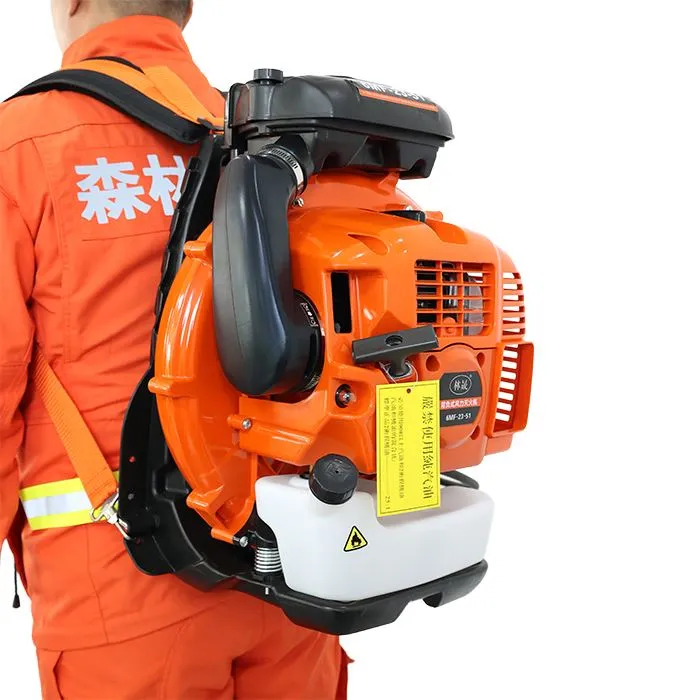
Now, let’s talk about the model that’s most important for structural fires, especially in multi-story buildings or areas where firefighters need to operate with full gear on their backs. That’s our Backpack-mounted Wind-powered Fire Extinguisher. When you’re inside a burning building, every pound of extra gear counts, and you need something that’s easy to carry and maneuver in tight hallways. This backpack model weighs just 18 pounds fully loaded (battery and blower) and delivers 140 mph of airflow, which is strong enough to smother small to medium Class A fires in a room, and can be used to clear smoke from hallways so firefighters can navigate safely. We designed the straps to be padded, so a firefighter can wear it for 20–30 minutes without fatigue, and the nozzle is adjustable—you can switch from a narrow stream for targeting small fires to a wider cone for clearing larger areas. A fire department in Chicago tested this model during a training exercise last year, and they found that it let firefighters reach fires in the back of closet-sized rooms that traditional extinguishers couldn’t get to, because the narrow nozzle of a standard extinguisher was too big to fit through doorways. It’s also great for smoldering fires after a main fire is out, because you can direct airflow into cracks or under furniture to put out embers that would otherwise re-ignite. If you’re a structural firefighter dealing with confined spaces or after-fire cleanup, the Backpack-mounted Wind-powered Fire Extinguisher is specifically built for that use case.
A lot of people ask me: why not just use a regular leaf blower? The answer is simple—regular leaf blowers aren’t designed for fire suppression. They’re too weak (most only hit 60–80 mph), their engines aren’t built for continuous use near heat, and they don’t have the precision control needed to target a fire without spreading embers. Our wind-powered models all go through rigorous fire testing, including heat resistance certifications (we can withstand up to 200 degrees Fahrenheit for 2 hours) and airflow calibration to make sure they’re strong enough to smother a fire, but not so strong that they send embers flying. We also test them in different altitudes—since wildfires can happen at 7,000 feet where oxygen levels are lower, our units are calibrated to generate consistent airflow regardless of elevation.
Another key difference between our models is their power source. The portable and backpack models are battery-powered, which is perfect for indoor use, campgrounds, or areas where gas is not allowed. The Firefighting Blower and Power Scythe are gas/propane powered, which gives them longer run time for large outdoor fires. We also offer a hybrid option for the Firefighting Blower, which lets you switch between battery and propane, so you can use it in areas with strict emissions rules without sacrificing power.
At the end of the day, the right wind-powered fire extinguisher depends on your specific needs. Are you a volunteer firefighter dealing with small campfires? The portable model is ideal. Are you a wildland crew creating fire lines? The Firefighting Blower or Power Scythe is your best bet. Are you a structural firefighter operating in tight spaces? The backpack model is built for that. We’ve spent years listening to our customers—firefighters, forest rangers, disaster response teams—and refining these models to solve real problems. If you’re looking to invest in wind-powered fire suppression equipment for your team, we’d be happy to walk you through each model’s specs, use cases, and benefits. Reach out to us to discuss your needs, and we can help you find the right fit for your operations.
References:

- National Fire Protection Association. (2022). Wildland Firefighting Equipment Standards. Quincy, MA: NFPA.
- U.S. Forest Service. (2021). Evaluation of Wind-powered Fire Suppression Tools for Wildfire Mitigation. Washington, D.C.: U.S. Department of Agriculture.
- International Association of Fire Fighters. (2023). Structural Firefighter Tool Selection Guide. Washington, D.C.: IAFF.
- Environmental Protection Agency. (2022). Emission Standards for Portable Gas-powered Fire Equipment. Washington, D.C.: EPA.
Send Inquiry