


Can a forest fire fighting helmet be equipped with a communication system?
Nov 05, 2026
Leave a message
As a supplier of Forest Fire Fighting Helmet, I've often pondered the question: Can a forest fire fighting helmet be equipped with a communication system? This isn't just a theoretical musing but a practical consideration that could significantly enhance the safety and efficiency of forest firefighters.
The Need for Communication in Forest Firefighting
Forest fires are unpredictable and often spread rapidly. Firefighters are frequently deployed in large teams across vast areas, facing extreme heat, poor visibility, and complex terrains. In such scenarios, effective communication is not just a convenience; it's a necessity.
Imagine a team of firefighters trying to contain a wildfire. One group might be working on creating a fire - break, while another is attacking the flames directly. Without proper communication, there could be a lack of coordination, leading to inefficiencies and potentially dangerous situations. A firefighter might unknowingly enter a high - risk area, or resources might be misallocated.
Moreover, in emergency situations, such as when a firefighter is in distress, quick and clear communication can be the difference between life and death. A timely call for help can ensure that the necessary support reaches the individual in need as soon as possible.
Feasibility of Equipping Helmets with Communication Systems
Technological Aspects
From a technological perspective, it is entirely feasible to equip forest fire fighting helmets with communication systems. Modern communication technologies, such as two - way radios, Bluetooth, and Wi - Fi, can be integrated into the helmet design.
Two - way radios are a well - established technology in firefighting. They allow for direct communication between team members within a certain range. These radios can be designed to be small and lightweight, fitting comfortably on the helmet. They can also be made resistant to the high temperatures and harsh conditions typically encountered in forest fires.
Bluetooth technology can be used to connect the helmet to other devices, such as smartphones or tablets. This enables firefighters to access additional information, such as maps, weather data, and real - time updates on the fire's progression. Wi - Fi can also be utilized in areas where network coverage is available, providing a more stable and high - speed communication option.
Design and Integration
Integrating a communication system into a forest fire fighting helmet requires careful design. The system needs to be unobtrusive and not interfere with the helmet's primary function of protecting the firefighter's head.
The microphone and speaker should be positioned in a way that allows for clear communication without obstructing the firefighter's vision or movement. For example, the microphone could be placed near the mouth, while the speaker could be built into the earpiece of the helmet.
The power source for the communication system also needs to be considered. It should be reliable and able to last for the duration of a firefighting operation. Rechargeable batteries are a practical option, and they can be designed to be easily replaceable in the field.
Benefits of Equipping Helmets with Communication Systems
Enhanced Safety
As mentioned earlier, effective communication enhances safety. Firefighters can quickly alert their team members if they are in danger, such as being surrounded by flames or experiencing equipment failure. This allows for a rapid response, reducing the risk of injury or death.
Improved Coordination
With a communication system, firefighters can better coordinate their efforts. They can share information about the fire's behavior, the location of hotspots, and the status of their operations. This leads to more efficient use of resources and a more effective fire - fighting strategy.
Access to Information
Communication systems can provide firefighters with access to vital information. For example, they can receive weather updates, which are crucial for predicting the fire's spread. They can also access maps of the area, helping them navigate through the forest more safely.
Challenges and Considerations
Environmental Conditions
Forest fires present extreme environmental conditions. High temperatures, smoke, and ash can damage the communication equipment. The system needs to be designed to withstand these conditions. For example, it should be made of heat - resistant materials and have a sealed enclosure to prevent smoke and ash from entering.
Cost
Equipping helmets with communication systems will increase the cost of the helmets. This is a significant consideration for fire departments, especially those with limited budgets. However, the long - term benefits of enhanced safety and efficiency may outweigh the initial cost.
Training
Firefighters will need to be trained to use the communication system effectively. This includes learning how to operate the equipment, how to communicate clearly, and how to troubleshoot any problems that may arise. Training programs need to be developed and implemented to ensure that firefighters are proficient in using the system.
Other Related Helmets and Their Potential for Communication
In addition to Forest Fire Fighting Helmet, we also offer Forest Distribution Helmet and Rescue Hard Hat. These helmets can also benefit from the integration of communication systems.
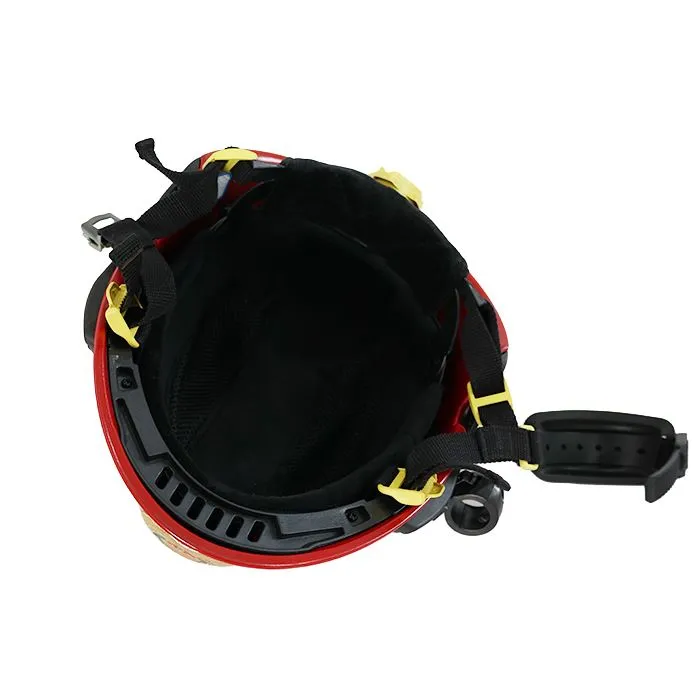
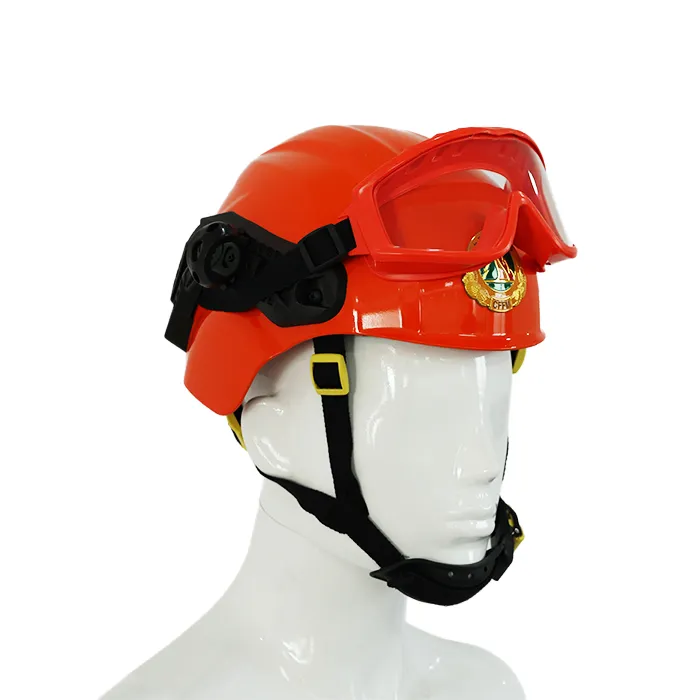
The Forest Distribution Helmet is often used by firefighters who are involved in distributing resources in the forest. Communication is essential for them to coordinate the delivery of supplies, such as water, fire - retardant chemicals, and equipment. A communication system in this helmet can ensure that the distribution process is smooth and efficient.
The Rescue Hard Hat is used in search - and - rescue operations in the forest. In these situations, clear communication is crucial for coordinating the search efforts and for providing assistance to those in need. A communication system can help rescuers stay in touch with each other and with the command center.
Conclusion
In conclusion, equipping forest fire fighting helmets with communication systems is not only feasible but also highly beneficial. It can enhance the safety and efficiency of forest firefighters, leading to better outcomes in fire - fighting operations. While there are challenges, such as environmental conditions, cost, and training, these can be overcome with careful design and planning.
If you are interested in our forest fire fighting helmets and the possibility of equipping them with communication systems, we encourage you to reach out to us for a procurement discussion. We are committed to providing high - quality products that meet the needs of forest firefighters.
References
- Firefighting Technology Handbook, 3rd Edition
- Journal of Forest Fire Research, Vol. 15, Issue 2
- Proceedings of the International Conference on Firefighting Equipment and Safety
Send Inquiry